
Out-of-Network Therapy Reimbursement for Gender Counseling in Arizona

Out-of-network care may involve insurance, but reimbursement follows a different process. For out-of-network therapy reimbursement for gender counseling in Arizona, you may pay for sessions upfront and submit a superbill to your insurer. Your plan determines whether it covers out-of-network therapy and how reimbursement is calculated. Authorization requirements, deductibles, and session limits can also affect the process.
Sorting through benefits and paperwork can feel overwhelming, especially when you’re seeking a supportive space to explore your gender and what feels right for you. You deserve clear information to help you make decisions at your own pace. This guide explains how out-of-network benefits work, what to ask your insurer about authorization and session limits, how upfront payments and superbills fit in, and what can affect reimbursement. It also covers how gender counseling can support your journey, so you can consider both the practical steps and the care itself.
Key Takeaways
- Review your plan’s out-of-network mental health benefits, deductible, coinsurance, authorization rules, and session limits before starting care.
- Out-of-network therapy may involve paying upfront, then submitting a superbill to your insurer for possible reimbursement.
- Submit superbills at the end of each month and keep copies of your claims and insurer responses.
- Reimbursement is calculated using your plan’s terms and its allowed amount, which may differ from the therapist’s fee.
- Gender Identity Center offers individual therapy as a space to explore your needs and goals at your own pace.
What’s out-of-network therapy?
With out-of-network behavioral health care, the therapist doesn’t bill your insurer directly. You may pay first, then submit a superbill or claim to seek possible reimbursement under your plan.
Requesting a Superbill
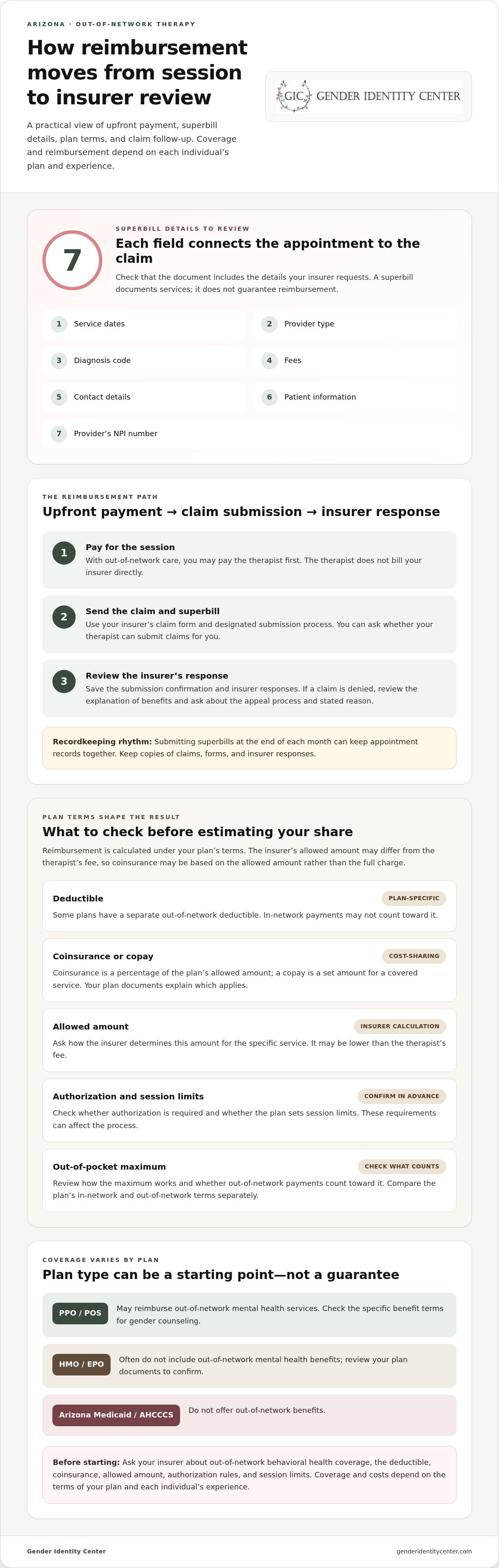
Ask your therapist for a superbill and whether they can submit claims on your behalf. If you submit it yourself, review the document before sending it to your insurer. A superbill can include service dates, provider type, diagnosis code, fees, contact details, patient information, and the provider’s NPI number. These details connect each appointment with your claim.
Does insurance cover gender-affirming counseling in Arizona, and what medical-necessity rules apply? Some plans may cover counseling if their out-of-network behavioral health benefits include the service. Reimbursement requires a diagnosis on the superbill, and the insurer applies its coverage and medical-necessity criteria.
Arizona Medicaid and AHCCCS don’t offer out-of-network benefits. With private insurance, PPO or POS plans may reimburse out-of-network mental health services, while HMO and EPO plans often don’t include this benefit. Check your plan documents for the specific terms that apply to gender counseling.
Submitting a Reimbursement Claim
To submit an out-of-network claim, use your insurer’s claim form and attach the therapist’s superbill. Follow the insurer’s instructions for submitting documents, and keep copies of everything you send. Submitting superbills at the end of each month can keep appointment records together and give you a clear record of your claims.
How do you submit an out-of-network therapy claim or superbill? Send the completed claim form and superbill through your insurer’s designated process, then save the submission confirmation. If reimbursement is denied, read the explanation of benefits to identify the reason. Ask the insurer about its appeal process and address the issue it identifies, such as missing information, a diagnosis code, or authorization.
For example, a superbill with service dates but no diagnosis code may not meet the stated reimbursement requirement. Before submitting, compare each field with the insurer’s form and confirm that patient and provider details match. Some insurers may request clinical records when reviewing out-of-network benefits, so find out what documentation the claim process requires.
A superbill documents services, but it doesn’t guarantee payment. The insurer calculates reimbursement under the plan’s terms, based on covered services, claim details, and applicable benefit rules. Keep copies of superbills, forms, and insurer responses so you can track each step and respond with relevant information if questions arise.
Why choose out-of-network benefits?
Out-of-network benefits may provide another path to behavioral health care when a therapist isn’t in your plan’s network. Before considering this option, compare its deductible, coinsurance, and coverage with your in-network benefits.
Out-of-Network Deductibles and Coinsurance
Some plans require you to meet a separate out-of-network deductible before coverage begins. Payments toward your in-network deductible may not count toward this requirement. Once you meet the applicable deductible, coinsurance determines your share of covered care. Out-of-network therapy generally costs more out of pocket than in-network care.
This example illustrates the calculation, not a therapy fee or a prediction of your plan’s reimbursement. Check your benefits documents for the out-of-network deductible and coinsurance, since both affect your share.
Copays and Out-of-Pocket Maximums
A copay is a set amount you pay for a covered service, while coinsurance is a percentage of the plan’s allowed amount. Your benefits documents explain which cost-sharing method applies to behavioral health visits, how your out-of-pocket maximum works, and which payments count toward it.
Compare these terms for in-network and out-of-network care separately. For example, note whether the plan lists different copays, deductibles, or maximums by network status. This comparison helps you understand how costs may accumulate across sessions, rather than focusing on the cost of a single visit.
Finding Your Plan’s Allowed Amount
To find your out-of-network deductible, coinsurance, and allowed amount, review your plan’s behavioral health benefits or call your insurer using the number on your insurance card. Ask how the plan calculates reimbursement for out-of-network gender counseling and whether it applies a separate deductible.
The allowed amount is the figure your insurer uses to calculate its share. It may be lower than the therapist’s fee, so coinsurance may apply to that amount rather than the full charge. Ask your insurer how it determines the allowed amount for the specific service.
PPO plans are more likely than many HMO plans to include out-of-network mental health benefits. Many PPO plans include them, while many HMO and EPO plans do not. Plan type is a useful starting point, but the specific benefit terms determine what coverage is available.
Before choosing, compare the expected costs, not just whether a plan says a service is “covered.” Write down the out-of-network deductible, coinsurance, allowed amount, copay, and out-of-pocket maximum. Then check whether out-of-network payments count toward that maximum. These details help you assess how the plan handles care over time.
Out-of-network benefits may be useful when your plan includes them and the coverage suits your needs. A separate deductible or lower allowed amount can still mean higher costs for you. Comparing in-network benefits with out-of-network terms gives you a clearer basis for deciding which option feels workable.
Prior authorization and session limits
Before scheduling ongoing therapy, understand how your plan handles authorization and session limits. These rules can affect whether a claim is eligible for reimbursement, including for telehealth in Arizona.
Prior authorization means your insurer reviews a service before care begins. The plan explains which services need approval, what information it requires, and how long approval lasts. Review your behavioral health benefits for authorization rules and note any steps to complete before the first session. Keep the approval details with your insurance records.
Skipping a required approval can affect a claim. Failure to obtain pre-authorization accounts for 12 percent of online therapy insurance claim denials. That figure makes authorization worth reviewing early, before scheduling sessions. If your plan requires approval, follow its stated process and keep documentation showing the authorization and its covered dates or services.
Session limits describe how many visits a plan covers within a stated period or under particular conditions. The plan may also explain how it reviews requests for additional sessions. Read the behavioral health section for any visit cap, renewal process, or authorization requirement. Track attended sessions and remaining covered visits to plan with clearer information.
Session length and billing codes can affect how a claim is processed. When reviewing telehealth mental health benefits, ask about psychotherapy CPT codes 90834 and 90837. These codes can help identify the type of psychotherapy service under consideration. Make sure the information you use matches the service and session documented on the claim.
Fees and authorization are separate considerations. A therapist’s session charge and the insurer’s allowed amount serve different purposes. The plan uses its allowed amount to calculate reimbursement, and that amount may be lower than the therapist’s fee. Review your cost-sharing terms alongside authorization requirements to understand how coverage and your payment responsibility interact.
Plan type matters, too. If you have Medicare, review Medicare-specific behavioral health information rather than assuming commercial insurance processes apply. For commercial coverage, check the policy’s terms for required authorization, covered session limits, and telehealth claims. Keep relevant plan pages or written responses together, especially if approval applies only to particular services or dates.
A simple preparation routine can help you stay organized:
- Find the plan’s behavioral health authorization instructions.
- Record any approval details and applicable session conditions.
- Track completed sessions against the plan’s stated limits.
- Keep billing codes and session records consistent across claim documents.
If a claim is denied, read the explanation of benefits and identify whether the issue concerns authorization, a session limit, or billing details. Follow the plan’s stated review process and include relevant records. Considering each issue separately can make it easier to understand what happened and what information the insurer needs to reconsider the claim.
Therapist fees and upfront payment
Out-of-network care may require you to pay for a session before seeking reimbursement. Understanding the payment sequence helps you plan for billing and keep insurance paperwork organized.
Fee-for-Service Payments
With fee-for-service payment, you pay the therapist directly for each session rather than using in-network billing. The therapist’s charge and the insurer’s allowed amount are different figures. Your plan calculates any reimbursement using its allowed amount and benefit terms, which may leave part of the charge for you to pay.
Before beginning, ask when payment is due and how the therapist documents each session. For example, clarify whether you pay at the appointment or are billed afterward. Knowing the timing can help you plan for upfront expenses while seeking reimbursement from your insurer.
Payment Methods
Payment methods vary by practice. Ask which forms of payment are accepted and whether payment is due at each session. Some practices accept major credit and debit cards; other options depend on their billing arrangements. Keep receipts with your appointment records so you can match each payment to its session and claim.
If you plan to use a health savings account or flexible spending account card, review the account terms before paying. Keep an itemized receipt and related billing documents. Payment with an HSA or FSA card is separate from an insurance claim, so track those transactions separately.
For out-of-network therapy, you may pay upfront and then submit a superbill to seek reimbursement. Plan your budget around the full payment due at the time of care, not just the amount you expect your insurer to reimburse. Reimbursement amounts and timelines vary by insurer and plan.
Keep the three figures that shape payment separate: the therapist’s charge, the insurer’s allowed amount, and your plan’s reimbursement. If the allowed amount is below the session charge, for example, the insurer may calculate its share using the lower figure. Your deductible and coinsurance also affect what you ultimately pay.
To prepare for billing, keep a simple record for each session:
- Record the date of care and payment date.
- Save the receipt, superbill, and claim confirmation together.
- Note the reimbursement amount and any insurer explanation.
- Track any remaining balance after reimbursement is processed.
These records make mental health expenses easier to follow, especially when anxiety about costs makes paperwork feel heavier. They can also help you spot a missing receipt or unpaid balance without confusing therapist charges with insurance calculations. A clear record supports practical decisions about continuing care at a pace that works for you.
How out-of-network therapy reimbursement works
For out-of-network mental health care, your insurance plan processes reimbursement after you submit a claim. The result depends on the plan’s covered benefits, deductible, and allowed amount.
The Reimbursement Process
Start by reviewing your plan’s out-of-network behavioral health benefits and claim instructions. After a session, submit the required claim form and superbill through your insurer’s process. The superbill needs a diagnosis for out-of-network therapy reimbursement. Save the submission confirmation and explanation of benefits, which shows how the insurer processed the claim.
Typical Reimbursement Rates
There isn’t one reimbursement rate that applies to every Arizona insurance plan. The plan’s allowed amount, deductible, and coinsurance determine its calculation. For example, an illustrative plan covers 75% of sessions up to a $100 covered amount after the out-of-network deductible is met. That example explains a calculation, not a standard rate.
Here’s the sequence to follow:
- Review the insurance plan’s out-of-network mental health benefits.
- Ask the insurer how it calculates the allowed amount for psychotherapy.
- Check whether a separate out-of-network deductible applies.
- Submit the claim form and superbill using the plan’s instructions.
- Read the explanation of benefits and compare its calculation with your records.
In-network therapists typically submit claims for clients. With out-of-network care, you generally submit the paperwork yourself unless the therapist handles claims on your behalf. Keep the claim, superbill, and insurer response together. If the explanation of benefits lists a different service date or diagnosis, these records can help you identify the discrepancy.
For adults using out-of-network benefits, reimbursement depends on the individual insurance plan, not simply on the counseling topic. The insurer applies its coverage terms to the submitted service and documentation. A diagnosis on the superbill is required for reimbursement, and some plans may request clinical records during review.
Reimbursement amounts and timelines vary by insurer and plan. Track the date you submit each claim and any response from the insurer. If a claim is denied, read the stated reason and follow the insurer’s review or appeal instructions. Missing information, plan exclusions, or an unmet deductible can all affect how a claim is handled.
Use the insurer’s explanation of benefits to understand the final calculation. Compare the allowed amount, deductible applied, coinsurance, and reimbursement listed with your superbill. This clarifies how the plan treated the session and what balance remains your responsibility. Save the explanation with the related claim documents.
Gender Identity Center: Individual Therapy
Gender Identity Center offers Individual Therapy for transgender and gender-diverse people seeking space to explore identity, relationships, or personal goals. You can discuss how therapy may fit your needs, including practical considerations for using out-of-network benefits. The work can focus on your priorities and experiences, without assuming there’s one right path.
Depending on what feels useful, Family Therapy, Group Therapy, or EMDR Therapy may also be options. Each form of support serves a different purpose, and the right fit depends on your goals and circumstances.
If you’d like to explore whether Individual Therapy feels like a next step, visit the scheduling page to connect with Gender Identity Center.
Take Your Next Step at Your Own Pace
Understanding out-of-network therapy reimbursement for gender counseling in Arizona can help you plan. The next step is finding support that fits your needs. Your priorities may change as you explore identity, relationships, or personal goals. Everyone’s experience is different, and there’s no single path you need to follow.
Gender Identity Center offers Individual Therapy, Family Therapy, and Group Therapy. These options can support different needs, whether you want space for personal reflection or prefer to include family or community in the process. Consider what feels most relevant to you now, knowing your perspective can guide the conversation.
Reimbursement depends on your insurance plan, so it may help to consider the practical details alongside the kind of support you want. If you’re ready to explore a next step, contact Gender Identity Center. You can begin with a conversation about what matters to you and move forward at a pace that feels right.
Frequently Asked Questions
What is a superbill?
A superbill is an itemized document a therapist can provide for you to submit with an out-of-network insurance claim. It typically records appointment dates, provider information, fees, patient details, and a diagnosis code. If you attend several sessions, for example, the superbill can help connect each documented visit with your claim. Keep a copy with your insurance paperwork.
How does out-of-network therapy reimbursement work for gender counseling?
You generally pay for care first, then submit the claim and superbill to your insurance plan to seek possible reimbursement. For out-of-network therapy reimbursement for gender counseling in Arizona, the plan’s terms determine whether the service is covered and how its allowed amount, deductible, and coinsurance affect payment. Save the insurer’s explanation of benefits to see how it processed the claim.
What diagnosis codes and documentation are needed for reimbursement for gender counseling?
An out-of-network therapy superbill needs a diagnosis for reimbursement, along with information identifying the service and provider. Documentation can include appointment dates, provider type and contact details, patient information, fees, and the provider’s NPI number. The appropriate diagnosis code depends on the clinical record, so don’t choose or change one yourself. Follow the insurer’s claim instructions for any additional documents it requests.
How can I check whether an Arizona therapist is eligible for out-of-network reimbursement?
Ask your insurer how your plan handles services from an out-of-network therapist, then compare its answer with your benefits documents. Eligibility depends on the plan’s terms and the provider information used for the claim, not simply the therapist’s Arizona location. Gender Identity Center provides superbills but doesn’t bill insurance directly, helping you submit documentation yourself when your plan includes applicable out-of-network benefits.
Which Arizona health insurance plans cover gender counseling with out-of-network therapists?
Some private PPO or POS plans may cover out-of-network gender counseling, while many HMO and EPO plans do not. Arizona Medicaid and AHCCCS do not offer out-of-network benefits. Check your plan’s specific terms.