
What to Expect Emotionally After Gender-Affirming Surgery in Tucson

Emotional recovery after gender-affirming surgery can bring relief and excitement alongside anxiety, sadness, frustration, or vulnerability. What to expect emotionally after gender-affirming surgery in Tucson depends on your experience, your physical recovery, and the support around you; difficult feelings alone don’t mean you made the wrong choice.
If you’re feeling low after gender-affirming surgery, more than one factor may be at play. Pain or mobility challenges, a history of anxiety or depression, financial strain, or limited social support can make recovery feel harder. Your feelings are valid, and you don’t have to work through them alone.
This article explores emotional ups and downs during recovery, signs that anxiety or depression may need attention, and ways to find support. It also explains how gender-affirming counseling can offer a respectful space to process complex feelings, strengthen coping strategies, and move through recovery at a pace that feels right for you.
Key Takeaways
- Make room for changing emotions during recovery; your experience may not follow a predictable timeline.
- Identify trusted people who can offer practical and emotional support, and plan a therapy session within 1-2 weeks of surgery if you already see a therapist.
- Explore how physical recovery, past mental health experiences, and outside stressors may shape feelings of anxiety or low mood.
- Consider whether gender-affirming individual, family, or group therapy, or EMDR therapy, could support you as you process recovery.
1. Support from friends, family, and peer communities
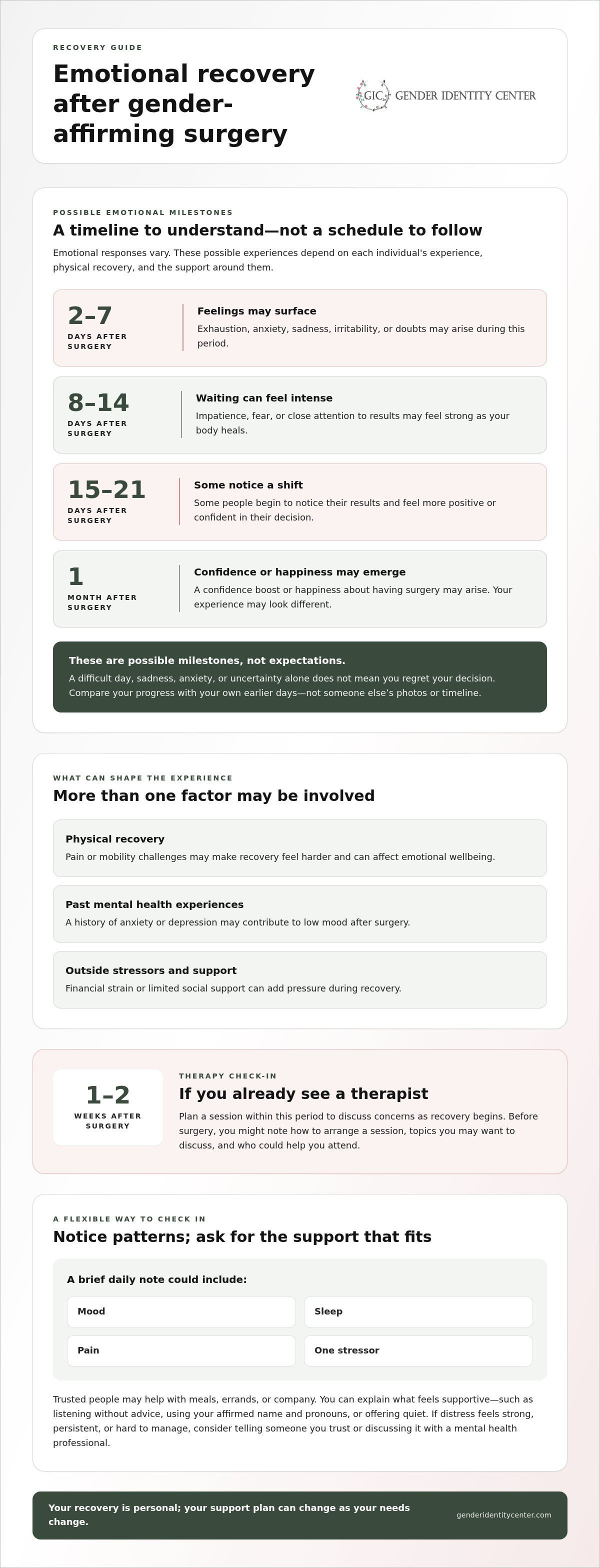
Emotional support after surgery can include understanding friends, family, peer communities, and mental health care from a therapist. If you already see a therapist, plan a session within 1-2 weeks of surgery to discuss concerns as recovery begins.
Before surgery, identify people who can offer practical help and emotional check-ins. One friend might bring meals while a family member helps with errands or keeps you company. Explain what feels supportive, such as listening without offering advice or using your affirmed name and pronouns. Clear requests can make support easier to receive.
Peer communities can give you space to talk with people who understand gender-affirming recovery. A Tucson-area LGBTQ+ group or online community may help you discuss social pressure, isolation, or questions you feel unsure about raising elsewhere. Consider which format feels comfortable, such as a moderated online conversation or an in-person gathering.
Make a simple therapy plan before your procedure: note how to arrange a session, identify topics you may want to discuss, and decide who can help you attend. If a therapist is supporting a surgery letter, they may review the WPATH standards of care. The conversation can also make room to discuss expectations and emotional support needs.
Keep your plan flexible as recovery unfolds. Arrange a brief check-in with someone you trust, then share whether you want company, quiet, or help with a task. If family members need guidance on communicating supportively, family therapy may help establish shared language and boundaries. Revisit the plan as your needs change, rather than expecting one person or resource to meet them all.
2. Emotions during recovery after gender-affirming surgery
Gender-affirming surgery may ease dysphoria for some people, while emotional responses vary. Relief and excitement can arise alongside anxiety, sadness, vulnerability, or impatience. A difficult day doesn’t, by itself, mean surgery was the wrong choice.
For Tucson patients, emotional recovery has no single pattern. During days 2-7 after surgery, exhaustion, anxiety, sadness, irritability, or doubts may surface. From days 8-14, impatience, fear, or close attention to results can feel intense. These feelings may shift as your body heals.
By days 15-21, some people notice their results and feel more positive or confident in their decision. At one month, a confidence boost or happiness about having surgery may emerge. These are possible milestones, not a schedule you need to follow. Compare your progress with your own earlier days, not someone else’s photos or timeline.
Practice self-compassion in practical ways: record a small improvement, write down a feeling, or try mindful breathing when stress rises. If social media comparisons or physical discomfort trigger distress, take a break and choose a grounding activity, such as journaling or a gentle walk when appropriate for your recovery. Follow your medical professional’s guidance before resuming activities, and share physical concerns with your care team.
For reliable recovery information, follow the instructions and guidance from your medical team, since recovery varies by procedure. Ask them about changes that worry you instead of relying on someone else’s online timeline. Tucson-area peer conversations can offer perspective, but another person’s experience cannot tell you what your recovery should feel like. Gender-affirming counseling can provide a nonjudgmental space to explore your own emotional experience.
3. Postoperative depression and anxiety symptoms
If you’re wondering what to expect emotionally after gender-affirming surgery in Tucson, sadness or anxiety alone doesn’t mean you regret your decision. Recovery can bring uncertainty alongside other feelings. Notice whether distress is becoming harder to manage or interfering with everyday tasks, such as resting, communicating, or following your recovery routine.
Several factors may contribute to low mood. A history of anxiety or depression may increase the risk of post-surgical depression. Outside stressors, including financial strain or limited social support, can add pressure. For example, worrying about bills while relying on one person for daily help can make an already demanding recovery feel harder.
Physical healing can affect emotional wellbeing, too. Chronic pain or mobility issues that prolong recovery may increase the risk of post-surgical depression. If discomfort or difficulty moving is shaping your days, note what has changed and share those concerns with your medical team. A mental health professional can help you explore the emotional impact.
Knowing what to expect emotionally after gender-affirming surgery in Tucson also means recognizing that feelings may not have one clear cause. Try a brief daily check-in: record your mood, sleep, pain, and one stressor. These notes can help you describe when distress arises and what feels difficult. Share them with a mental health professional if you want help understanding patterns.
Consider reaching out when anxiety or sadness feels strong, persistent, or difficult to handle. Tell someone you trust what kind of help would be useful, or arrange a counseling conversation to explore your feelings. If emotional strain makes daily needs harder to manage, say so plainly. Asking for support is a practical way to care for yourself during recovery.
Emotional recovery can include sadness, anxiety, and uncertainty alongside other feelings. These emotions alone do not mean patients regret their decision.
4. Gender-affirming counseling
Gender-affirming counseling can give you room to process strong emotions after surgery. A session may focus on relief, sadness, anxiety, or mixed feelings without treating one response as the “right” one. Bring the concerns that matter most to you, including changes in body image, relationships, or expectations for recovery. Your identity and priorities remain yours to define.
To make a session more useful, write down a few topics beforehand. Note when anxiety rises, what thoughts accompany it, and what kind of support you want. You might ask to practice grounding or mindful breathing for stressful moments. A counselor can help you explore coping approaches and reflect on what feels supportive in your circumstances.
If a therapist is supporting a surgery letter, they may review the WPATH standards of care. That conversation can also make space for questions about emotional readiness and support needs. Counseling does not replace guidance about physical recovery; your medical team remains the contact for surgical concerns. Keeping those roles clear helps you bring each question to the right conversation.
Gender counseling or individual therapy may help if difficult emotions feel hard to carry alone or you want a dedicated space to reflect. Sessions can focus on your transition, the meaning of recovery, or communication with people close to you. A counselor may help you notice patterns and consider coping tools, while letting your needs guide the pace and focus.
For a first session, choose one immediate concern, such as fear about healing or feeling disconnected from others. You can also share what you hope counseling will offer, then revisit that goal as recovery changes. Explore therapist options for gender-affirming support if you’re ready to consider counseling as part of your emotional care.
Gender Identity Center: Individual Therapy
Gender Identity Center offers Individual Therapy for people processing emotions connected with gender-affirming surgery and recovery. If anxiety, sadness, or questions about your transition feel difficult to manage alone, individual sessions provide space to explore what’s happening and consider coping approaches that fit your needs.
Bring a specific concern, such as feeling overwhelmed by recovery or finding it hard to explain your emotions to loved ones. Family Therapy may help you communicate with supportive relatives, while Group Therapy can offer connection with peers. EMDR Therapy is also available to discuss with a therapist.
Your experience and goals can guide what you choose to discuss. To explore whether individual support feels like a helpful next step, visit Gender Identity Center’s therapist page.
Take the next step at your own pace
Your emotional recovery belongs to you. There’s no single way to make sense of a major change, and you can choose the support that feels right as you move forward. If you’re still considering what to expect emotionally after gender-affirming surgery in Tucson, let your questions guide the next conversation rather than expecting yourself to have every answer now.
Individual therapy can offer a private space to explore feelings, identity, and the changes you’re experiencing. Bring one concern, such as how to talk with someone close to you, or begin with whatever feels most present. A first step can be small: learn about the support available and decide whether a conversation would help.
Contact Gender Identity Center to explore therapy support. You deserve to move through this chapter with care, agency, and room to become more fully yourself.
Frequently Asked Questions
Why might I feel depressed after surgery?
Depression after surgery may relate to several pressures happening together, rather than a single cause. Pain, limited mobility, disrupted sleep, or slower recovery can affect mood, while financial strain or isolation may add stress. A history of anxiety or depression can also matter. Note which changes feel most influential, then bring those observations to a mental health professional.
How long does post-surgery depression last?
There isn’t one set duration for post-surgery depression. Its course can depend on emotional health, physical healing, ongoing discomfort, and available support. Instead of waiting for a particular date, notice whether low mood is easing, staying steady, or making daily life harder. Sharing those changes with a mental health professional can help you consider appropriate support.
Is it normal to get postoperative depression and anxiety?
Sadness or anxiety can occur after surgery, and these feelings don’t prove you made the wrong decision. Recovery can involve physical discomfort, uncertainty, and changes in routine, all of which may affect emotional wellbeing. If you’re unsure how to interpret a feeling, describe it in your own words to someone you trust or a mental health professional.
When should I seek help?
Reach out for mental health support if distress feels difficult to manage, keeps increasing, or makes it hard to care for yourself or stay connected with others. For example, tell a counselor if fear is preventing you from resting or accepting help. Direct concerns about pain, healing, or other physical changes to your surgical care team so they can address the medical side.
What emotional changes are common after gender-affirming surgery?
Emotional responses can include relief, excitement, vulnerability, anxiety, sadness, frustration, or impatience. You may feel more than one emotion, and feelings can shift as recovery progresses. For example, you might feel glad about your decision while also unsettled by temporary changes in routine or body comfort. Naming each feeling can help you explain what you need.
How long does emotional recovery usually take after gender-affirming surgery?
Emotional recovery doesn’t follow one universal timetable. It can unfold differently depending on the procedure, physical healing, personal history, and available support. Some feelings may change as recovery moves forward, while other concerns may need more attention. Rather than measuring your experience against someone else’s, notice what is changing for you and discuss ongoing distress with a mental health professional.