
Gender Identity Exploration Therapy for Adults in Arizona

What if questioning your identity later in life isn’t a sign that you’ve missed your chance to understand yourself, but an invitation to explore what feels true now? Exploring gender identity later in life in Arizona can bring up questions about gender, sexuality, relationships, and how you want to move through the world. You don’t need to have a label or a clear destination before beginning.
If these questions feel complicated, that makes sense. Gender identity and sexual identity are distinct, though they can influence how you understand yourself and your relationships. Therapy offers a supportive space to explore them at your own pace, without expecting you to reach a particular conclusion.
This article explains what identity exploration therapy can involve, how it may support relationships and people at different life stages, and what to consider when seeking professional support in Arizona. You’ll also learn how gender counseling can make room for reflection, self-understanding, and choices that fit your experience.
Key Takeaways
- Therapy can help you explore gender and sexual identity without needing to choose a label or decide on a specific outcome.
- Identity exploration can happen at different stages of life, and the questions that matter may shift with your experiences and priorities.
- Support can help you reflect on how identity questions affect relationships and consider ways to communicate that feel right for you.
- Learn how Arizona’s legal context may shape access to gender-affirming care and where therapy can fit into your next steps.
Gender-affirming therapy and identity exploration
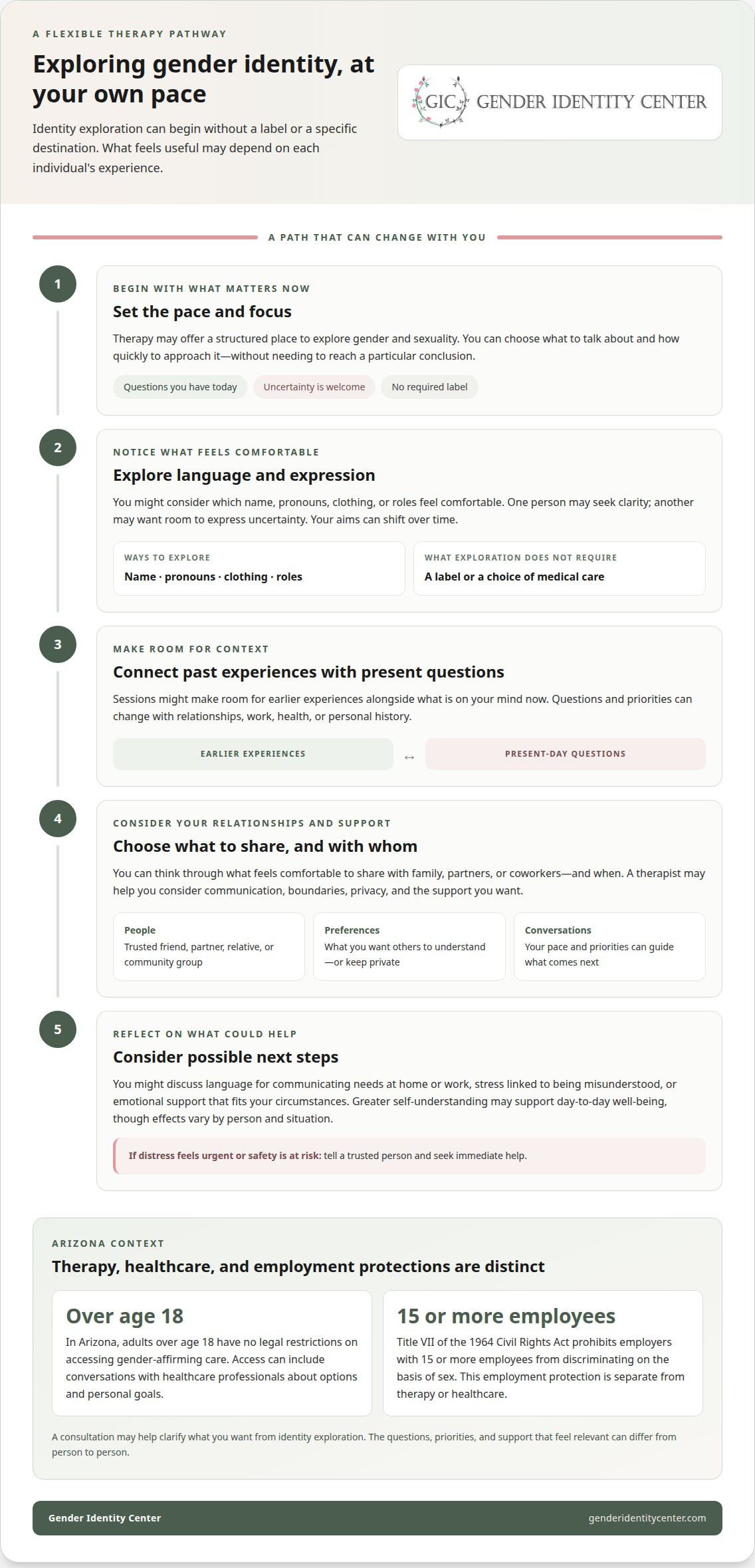
Therapy may offer a structured place to explore gender and sexuality. You might consider which name, pronouns, clothing, or roles feel comfortable. One person may seek clarity; another may want support expressing uncertainty. These aims can shift with relationships, work, health, or personal history. Exploration doesn't require adopting a label or choosing medical care. For someone exploring gender identity later in life in Arizona, sessions might make room for past experiences alongside present questions.
In Arizona, adults over age 18 have no legal restrictions on accessing gender-affirming care. That access can include conversations with healthcare professionals about options and personal goals. Separately, according to the U.S. House of Representatives, Office of the Law Revision Counsel, Title VII of the 1964 Civil Rights Act prohibits employers with 15 or more employees from discriminating on the basis of sex. This employment protection is distinct from therapy or healthcare. A consultation may help clarify what you want from identity exploration, such as language for discussing your needs at work or home.
LGBTQIA+-affirmative counseling recognizes that every person’s identity and priorities are individual. Rather than steering you toward a predetermined conclusion, a therapist might help you examine questions, notice patterns, and consider possible next steps. Greater self-understanding may support day-to-day well-being, such as communicating boundaries or making choices aligned with your values. The effects vary by person and circumstance. You might also discuss stress linked to being misunderstood and consider what feels useful to address in therapy.
If someone close to you is exploring gender-affirming care, listening before offering advice may feel helpful in some situations. You could ask what name and pronouns they want you to use, and follow their lead about sharing personal information if that seems right to them. A partner, for example, might want help discussing changing relationship needs, while an adult child may prefer privacy. It may be useful not to treat one conversation as a final answer; feelings and language can evolve. Support might mean staying curious, respecting the person’s pace, and making space for follow-up conversations. If you’re supporting someone, their preferences may help guide what kind of help feels welcome.
Support for people across the lifespan
Identity questions can arise at different points in life, and the support that feels useful may change with your circumstances. Therapy can make space for concerns about relationships, community, and earlier experiences.
Talk Therapy and Emotional Support
Talk therapy gives you room to consider how gender, orientation, and life events connect for you. You might discuss a change in how you describe yourself or reflect on school experiences that still shape your sense of belonging. The focus can stay on your concerns and goals, rather than reaching a prescribed label. Notice whether the conversation lets you set the pace and choose what to explore.
Community and Support Systems
Support systems can include a trusted friend, partner, relative, or community group. You might discuss which people feel safe to involve, what you want them to understand, and what you prefer to keep private. Someone may want a friend’s company at a community event but not want family involved yet. The right balance depends on your experience and relationships.
Mental Health Risks and Support Options
Adults can talk with a therapist about stress, loneliness, anxiety, low mood, or concerns about rejection while exploring identity. These experiences vary, and none determines a person’s gender or orientation. A therapist can help identify what is affecting daily life and discuss emotional support, coping strategies, or ways to strengthen social connection. If distress feels urgent or safety is at risk, tell a trusted person and seek immediate help.
Resources for Older Transgender Adults
In Arizona, SOGIA’s vision includes supporting individuals, families, and couples across the lifespan. Its psychologists have specialized training in areas of the 2SLGBTQIA+ community that include the aged community. Older transgender adults can consider whether support addresses concerns such as privacy, family relationships, community connection, or the effects of life changes. A therapist consultation can be a starting point for discussing what kind of support feels relevant to you.
Family and social relationships
Therapy can help you consider how to discuss gender questions with family, partners, or coworkers. You can explore what feels comfortable to share, with whom, and when, while weighing your relationships and personal circumstances.
For a partner, identity exploration may bring up questions about communication, intimacy, or shared plans. A therapist can help you name those concerns and prepare for a conversation that reflects your needs, without assuming how your partner will feel. You might discuss whether to explain a new term you’re using for yourself or simply ask for time to think. Your pace and priorities can guide the discussion.
Family responses can vary, especially when relatives have different expectations or understandings of gender. In therapy, you can think through what support you want and how to respond to questions. A transgender adult might want a sibling to use different language while choosing not to discuss every part of their experience. You can also consider what boundaries feel appropriate if a conversation becomes tiring or uncomfortable.
Work relationships may raise separate concerns, such as how you want colleagues to address you or whether you want to share anything about your identity. A therapist can help you consider possible approaches and personal factors, including workplace dynamics and your comfort. You could discuss how to respond if a coworker uses an outdated name, or whether approaching one trusted colleague first feels easier. There’s no single script that fits everyone.
Exploration can also change how you understand existing relationships over time. Some people want loved ones involved in a conversation; others prefer individual space before discussing changes. Therapy can help you distinguish your needs from others’ expectations and identify what you want to revisit later. A useful starting point is to bring one current relationship concern to a session, such as feeling unsure how to explain your changing understanding of yourself.
What Arizona laws and policies affect transgender adults and gender-affirming care?
Arizona law covers different questions, including access to care, workplace discrimination, and identity documents. These rules address separate situations, so a protection in one area doesn’t automatically settle another. For adults over age 18, Arizona has no legal restrictions on accessing gender-affirming care. The legal framework for minors differs. According to the Arizona State Legislature, doctors may not provide irreversible gender-affirming surgery, including top surgery, to people under age 18, with an exception noted for some minors who are intersex.
Employment protections involve both federal and state law. In 2020, the U.S. Supreme Court held in Bostock v. Clayton County that firing someone because of sexual orientation or gender identity is sex discrimination. Arizona does not have a statewide law explicitly protecting LGBTQ+ people from employment discrimination based on sexual orientation or gender identity. If workplace concerns affect your choices, separate the federal rule from Arizona’s statewide protections when considering your circumstances.
Other daily-life questions have their own context. Arizona does not currently restrict transgender people from using restrooms that align with their gender identity. There is also no legal obligation to have consistent gender markers on different documents. Under the stated rule, your documents do not all have to display matching markers. If you’re considering document changes, think about which records matter for your needs and what each institution’s process involves.
These legal points don’t determine what identity means to you or what care you want. They can, however, help frame a consultation about personal goals, workplace concerns, or family conversations. Gender counseling can provide a space to discuss how legal context intersects with your choices, without treating one decision as right for everyone. To explore how gender counseling may support your questions, consider gender counseling support.
Gender Identity Center
Gender Identity Center offers a supportive place to explore questions about gender identity and how they connect with your life. Individual Therapy can provide space for personal reflection, while Family Therapy or Group Therapy may suit people seeking support in shared settings. EMDR Therapy is also available to work through experiences connected to your current concerns.
You might reach out when you want help making sense of changing feelings, discussing identity with loved ones, or finding a pace that feels right for you. The next step can be a conversation about what you’re experiencing and what kind of support may fit. Contact Gender Identity Center when you’re ready to explore that possibility.
Take the Next Step at Your Own Pace
Exploring gender identity later in life in Arizona can raise questions that don’t need immediate answers. You can begin by noticing what you want support with now, whether that means understanding your feelings, making room for change, or deciding how much to share with others. Your next step can be small and shaped by your priorities.
Gender Identity Center offers Individual Therapy for personal reflection, Family Therapy for shared conversations, and Group Therapy for support alongside others. The right setting depends on what feels useful and the kind of support you’re seeking. You can reach out to discuss what you’d like help exploring, without needing to have everything figured out first.
Contact Gender Identity Center when you feel ready to begin a conversation. Your path can unfold at a pace that respects your experience.
Frequently Asked Questions
What does exploring gender identity later in life involve?
It can involve reflecting on how you experience gender and what feels congruent in daily life. You might notice that certain social roles feel uncomfortable or that different language for yourself feels more fitting. Exploration can include discussing these observations with a therapist, considering what you want to change or keep, and making space for uncertainty. You decide what the process means for you.
What should adults in Arizona look for when choosing an LGBTQ-affirming therapist for gender exploration?
Look for a therapist who respects your self-understanding, listens without steering you toward a particular identity, and can discuss your goals in clear, everyday language. You may also consider whether you feel comfortable raising concerns about privacy, relationships, or cultural and faith backgrounds. In Phoenix and Tucson, Gender Identity Center offers Individual Therapy and gender counseling for people exploring these questions.
What Arizona support groups or community organizations serve transgender and nonbinary adults?
Gender Identity Center offers Group Therapy, which can provide a setting to connect with others while exploring gender-related concerns. SOGIA is another named Arizona resource; its stated vision includes supporting individuals, families, and couples across the lifespan, and its psychologists have specialized training that includes the aged community. These options serve different purposes, so consider whether you’re seeking therapy with peers or broader community support.